
About
About Belief Psychotherapy
Broadly speaking Belief Psychotherapy stems from the idea that each person’s experience of life proceeds and unfolds from their belief system.

When I was studying to qualify towards licensure, more than any other, I was drawn to the person-centered psychology of Carl Rogers. My degree included a specialization in spiritual psychology, so I am also drawn to that path of resolution and relief. The writings and suggestions of Louise Hay and Mahatma Gandhi particularly impress me in this relation. In addition, during my years working in rehab I have become familiar with Alcoholics Anonymous’ twelve steps and its call to action to facilitate personal change. I have taken elements of all of these disciplines to form a theory and practice, which I call Belief Psychotherapy.
Many of our beliefs stem from early childhood and we live and act from such beliefs without ever really examining what they are and if we really agree with them. If you have grown up in a conflicted household, this can lead to much confusion.
With my clients I develop a system of realization and analysis of their belief systems in order to discard negative beliefs and enhance positive ones.
Belief Psychotherapy is an eclectic therapy. While utilizing the classic psychotherapeutic techniques from Freud on, I have taken much inspiration from philosophy in general and particularly self-help philosophy, that is the commitment to facilitate and make changes through one’s own action.
I have noticed over the years, before and since becoming a therapist, people stating that they often feel great and inspired during the actual therapy session but quickly sink back into negative patterns when alone. So in order to provide a bridge of affirming activities between sessions, I have developed, over time with my clients, a system of proactive self-interventions for clients to engage in out of session.
For some clients this is not the appropriate style. Some people find the help they need in simply processing their material, with me to bounce off of, on a regular basis.
Context
About Psychotherapy
It seems to me that therapy falls into three basic categories:
- Analytical psychotherapy, as in Freud, Jung and their respective followers. In this model the therapist listens to the client’s story and then offers feedback as to where, when and why the client’s feelings and views developed, how they are shaping present behavior and what this means.
- Counseling (therapy), as in Adler and those that followed- Ellis and Beck are prime examples. In this model the therapist collaborates to set goals with the client and then strategizes with the client behaviors designed to achieve these goals. The therapist advises a pattern of development (for example, in CBT), which the client practices to achieve goals.
- Person-centered psychotherapy as in William James and those who came after him, Carl Rogers being the most well known. In this model the therapeutic alliance between client and therapist is of paramount importance. The therapist recognizes that the client is “the best expert.” The therapist is not there to advise, diagnose or direct the client but, rather, to collaboratively find catharses and solutions through empathy and dialogue with the client. While drawing on ideas from all three, Belief Psychotherapy falls more into this third category than any other, though it is informed by all three.
Your therapist
About Crispin Kitto
I was always interested in psychology, and no wonder: my parents ran a school for “maladjusted” children and that’s where I grew up! So ideas like “the unconscious,” “superiority/inferiority complex,” “introvert/extrovert,” etc. were all part of the language that I heard as far back as I can remember.
I was also sent to schools that were founded in psychological thinking.
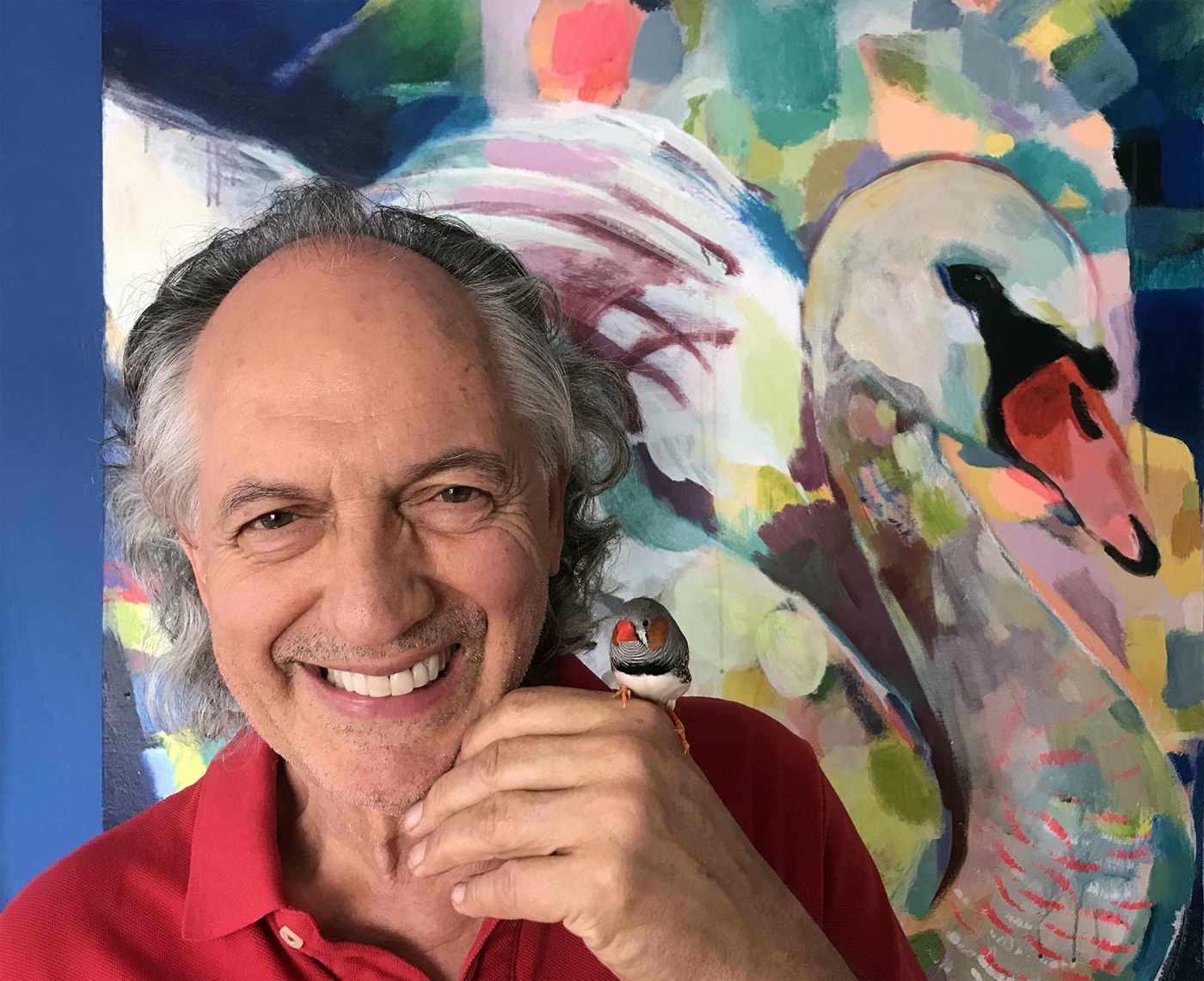
I have been in the field of psychotherapy for the last ten years. Before coming to psychotherapy I was a chef for over thirty-five years. And continued to cook for another five years to support myself while going to university. So, forty years a chef! During which time I also played a lot of music (my bachelor’s is in classical guitar performance) and, as a single parent, raised two marvelous daughters. My master’s was in clinical psychology with a specialization in spiritual psychology. I am a solution-focused therapist dedicated to the idea that each person has the answers they need within. My goal is to help my clients hone their belief system to one that translates into a more fulfilling living experience.
I will meet you on your terms, informed and aided by my training and experience.
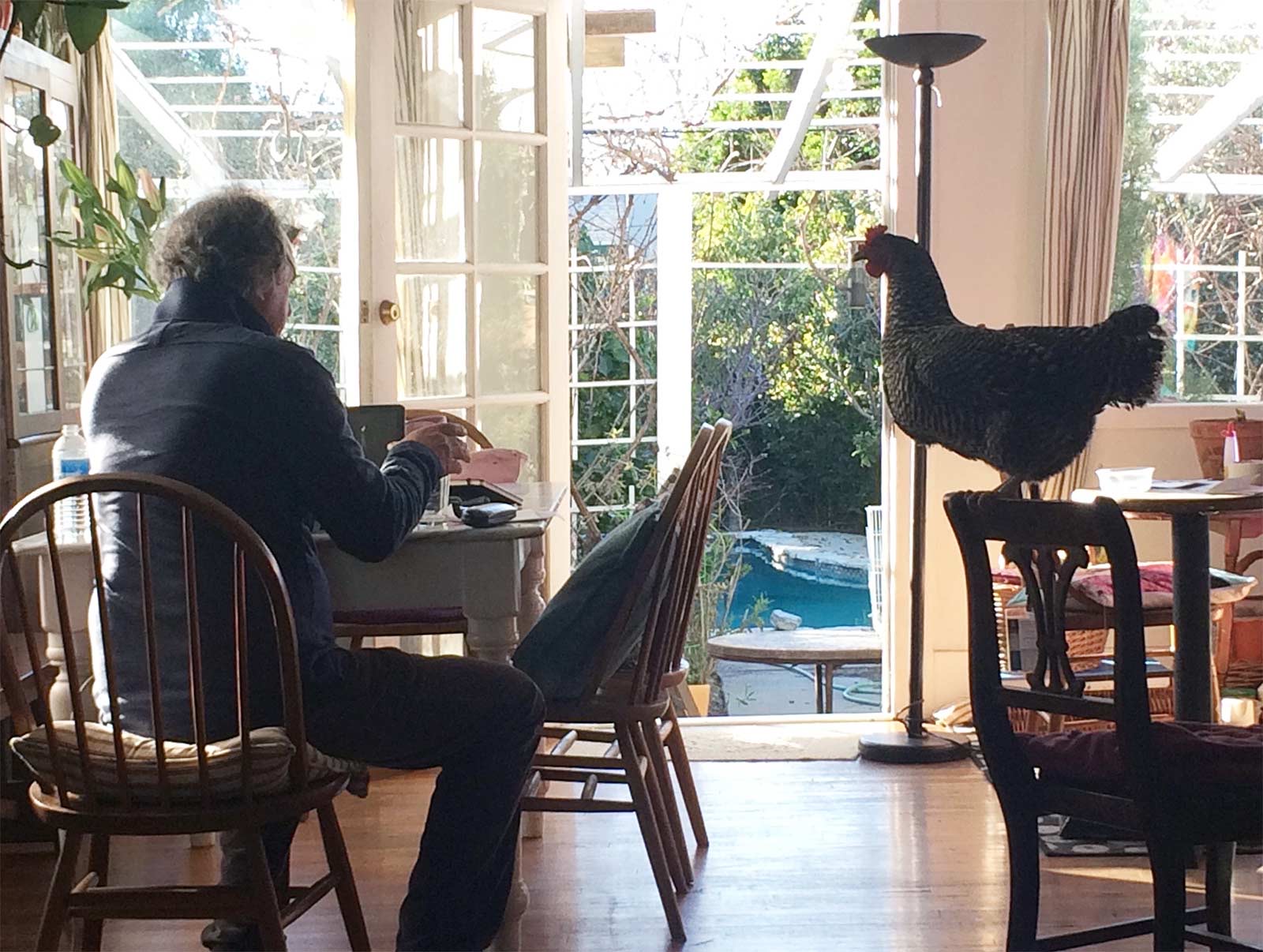
My office is located in Oxford Square (just south of Hancock Park) in the back garden of my home. As mentioned elsewhere on this site, I keep quite a few animals (doves, finches, chickens and a dog), which many of my clients find both entertaining and grounding.
Ready to talk?
Send a short note and I’ll be in touch.